
Over the Hill
What this once meant when I was younger and what it risks meaning to me now

The phrase ‘Over the hill’ has always had two meanings for me.
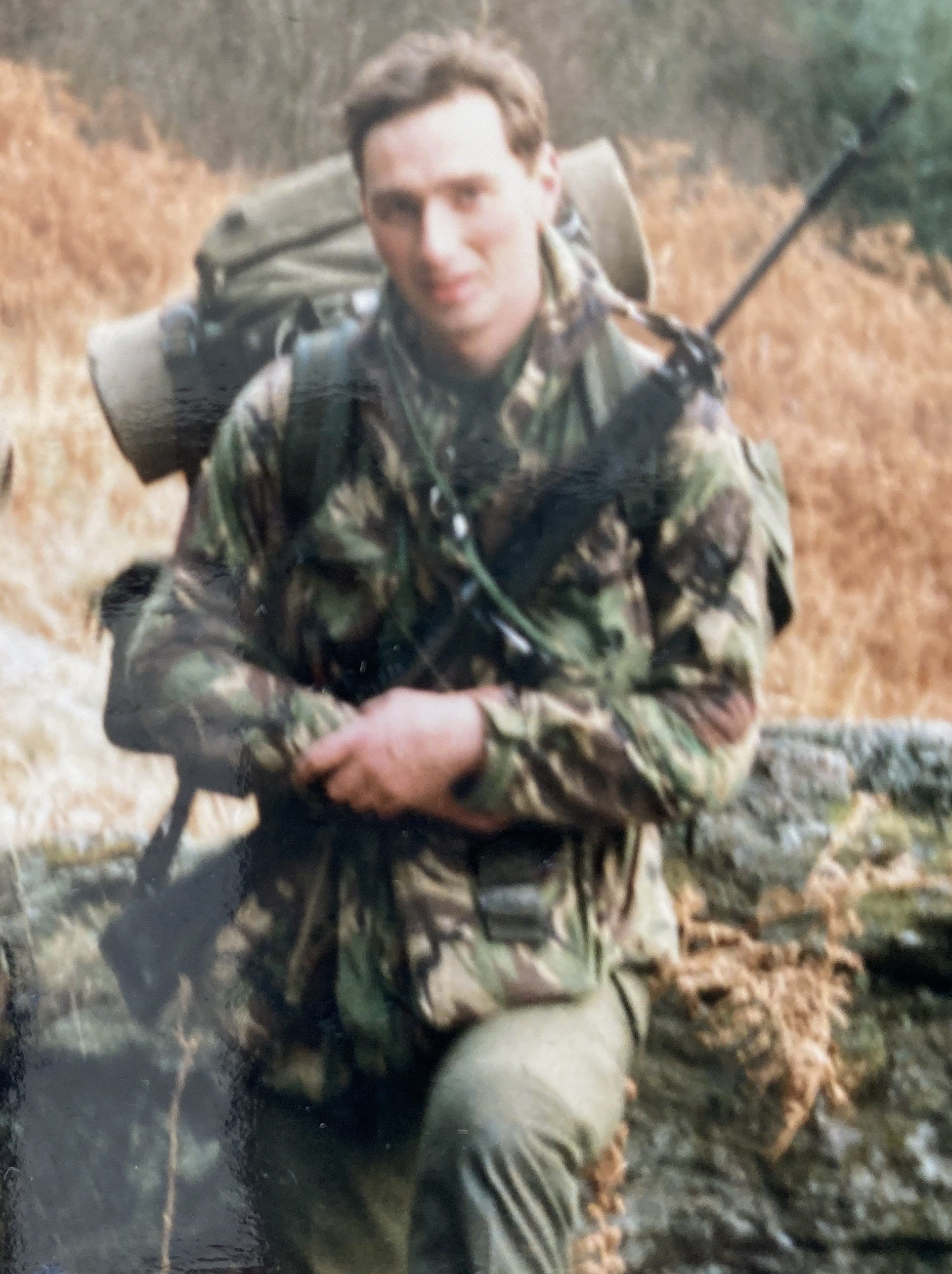
When this phrase was first relevant , it was forty years ago, when as an Army officer. Going ‘over the hill’ was literal, and vital. It meant leading your platoon into unknown, invariably chaotic and often dangerous territory. The task was to assess the situation, form a plan, communicate it clearly and then lead your team through to execution.
That simple but demanding process, assess, plan, communicate, execute, became my lifelong operating system. It served me well across three decades of civilian leadership, business, and campaigning.
Of course, in civilian life, ‘over the hill’ has another meaning, one that sits less easily with me. It is of course shorthand for ‘past your prime’, too old, no longer useful. It is a phrase whispered more than spoken, but its consequences are visible everywhere.
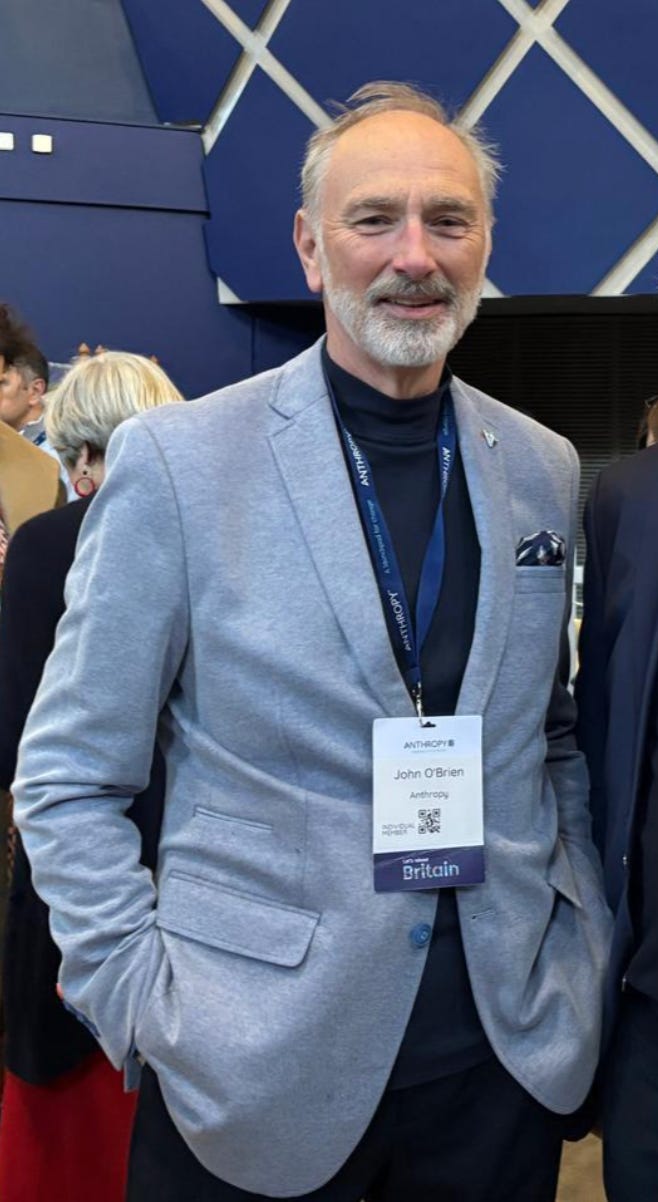
It is now a year since I stepped down from my role as EMEA Managing Partner of a consortium of Omnicom agencies, at the American marketing giant, closing what many would see as a successful career in global business advisory, fifteen years working with them and my previous agency, some of the most interesting companies, nonprofits, and government agencies in the world. Before that, I spent a decade helping to shape national corporate responsibility through His Majesty The King’s charity, Business in the Community. A privileged journey to work closely with him and major corporates on their CSR by any measure and yet, in the year since, I have found myself in the same position as many others of my generation, highly experienced, still energetic, but increasingly wondering where one fits in a world that appears to prize youth over wisdom.
Two contacts, both in their fifties, youngsters by my standard, both highly capable, recently confided similar frustrations. One, is struggling to find NED type roles after exiting his own business, whilst another has resigned himself, after months sending out applications to simply adopt the Golf course as his regular ‘office’. These are not men short on drive or talent, or are desperate for the money, but they are men who have crossed that invisible line where professional experience becomes, bizarrely, a liability, perceived as being potentially expensive, or even (and wrongly) out of date.
In my own case, I am fortunate. I do have a paid NED appointment and several charitable roles and in Anthropy, my creative energies are occupied. I do not yet feel financial strain, but I am not earning anywhere near what I did, which does require compromise, but perhaps more significant, the sense persists that four decades of leadership, insight, and hard-earned wisdom are being left, to use another tired phrase, ‘on the shelf’.
It isn’t for lack of trying. I have spoken to reputable board search firms without any interest. I have joined the well-known NED digital platforms, only to find my inbox cluttered with irrelevant mass mailings. I have let my personal network know my interest, yet the only referals that seem to come are unpaid, on the assumption that those in later life should be content to contribute for free.
I find this ironic, really. We live in a country that has labour shortages. The Jobs Foundation, a member of Anthropy, recently highlighted that there are over a million vacancies in the UK and yet we quietly discard the very people who could help bridge those gaps. The Age Irrelevance campaign also makes a compelling case that age should be no more relevant than gender or ethnicity in assessing someone’s ability to contribute but while we have made visible strides in those other areas, age remains the last acceptable prejudice in the workplace.
Now I know I don’t fit the linear mould. I have been told by board search firms that if I had spent forty years either as an accountant and had become a finance director, or had spent my time in just one sector, where I had a reputation, I would be easier to place. I also was specifically told by one business that if I had been a woman with my experience, there would be more options. Now I can’t do anything about the latter feedback, but generally I think this misses exactly what others have found of value in my professional life. I have not spent forty years working up a single corporate role, nor specialised narrowly in one sector. My value, and the value many others bring, lies in breadth, the ability to see patterns across sectors, to connect ideas, to think laterally and know the wider world, in effect to have a hinterland. It is the sort of polymathic curiosity that businesses once found useful and which, I would argue, they need now more than ever. A bit of grey hair, or even no hair at all can add something.

Believe me, this is not a personal lament, nor a plea. It is simply an observation. If someone like me, who has led businesses internationally, advised major brands, Non-profits and governments, written business books, including a WHSmith No3 Bestseller, Amazon No10 and Forbes ‘Top 15’ and more recently created a national leadership gathering like Anthropy, finds it challenging to secure meaningful roles, what hope is there for those who lack the same network or platform? How much wisdom, energy, and creative capacity are we allowing to whither simply because of an outdated reflex about age? Genuinely, if I didn’t have Anthropy, I don’t know how I would be filling my time and that seems bizarre.
As a result of this, I intend to ensure that Anthropy26 includes at least one dedicated session on ageing and the role of older people in the workplace. Because this issue doesn’t only affect executives, it affects skilled workers, carers, craftsmen, administrators, anyone who still wants, and deserves, to contribute. Where are the opportunities and flexibility for older people in retail, hospitality, catering etc?
We talk endlessly about sustainability, but human sustainability must surely include how we value and retain experience. I would love to hear from any organisation or leader who would like to be part of that conversation at Anthropy.
If you are receiving this, it is because you have at some point connected with me personally, or with Anthropy. I hope this message resonates and as a gesture, here is a personal 20% discount until 20 October: 👉 www.anthropy.uk if it appeals.
Use my personal code: TAM32620
Step forward. Help us build a United Kingdom. Thank you.
John O’Brien