
Remembrance - A Personal Reflection
As we enter national remembrance, I realise I have been entirely shaped by war.

The Royal British Legion has launched the annual remembrance period but this year my thoughts have taken a different turn.
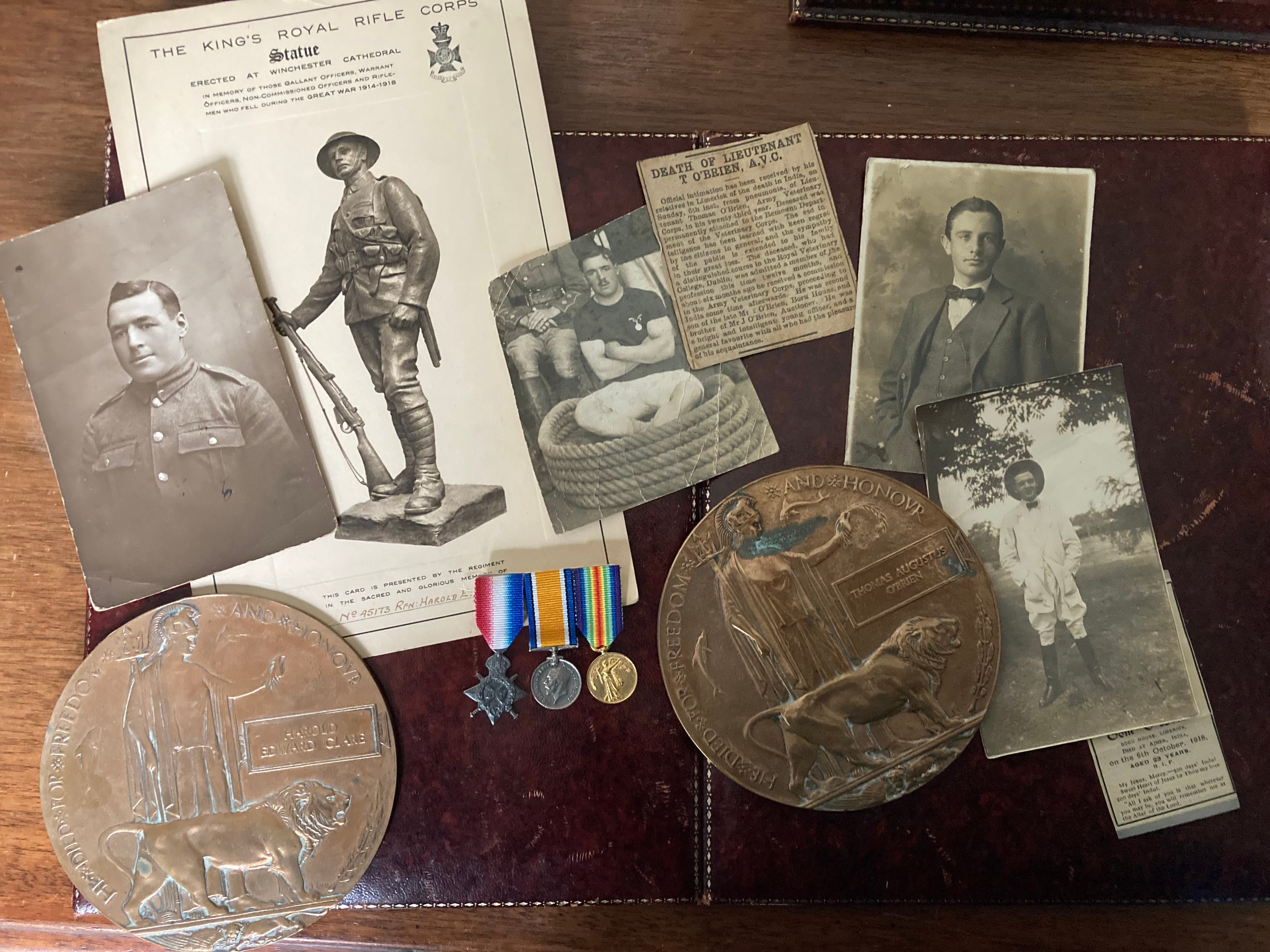
Although I grew up knowing of my great uncles who died in the First World War, the war which initiated our national remembrance ritual and who were remembered by the bronze plaques in my grandmother’s home (pictured above) it is the influence of the Second World War on me, as a baby boomer, that has been the most significant influence on my thinking, my professional life, and my character. I realise now that my life has been entirely shaped by World War2 and I must explain why.
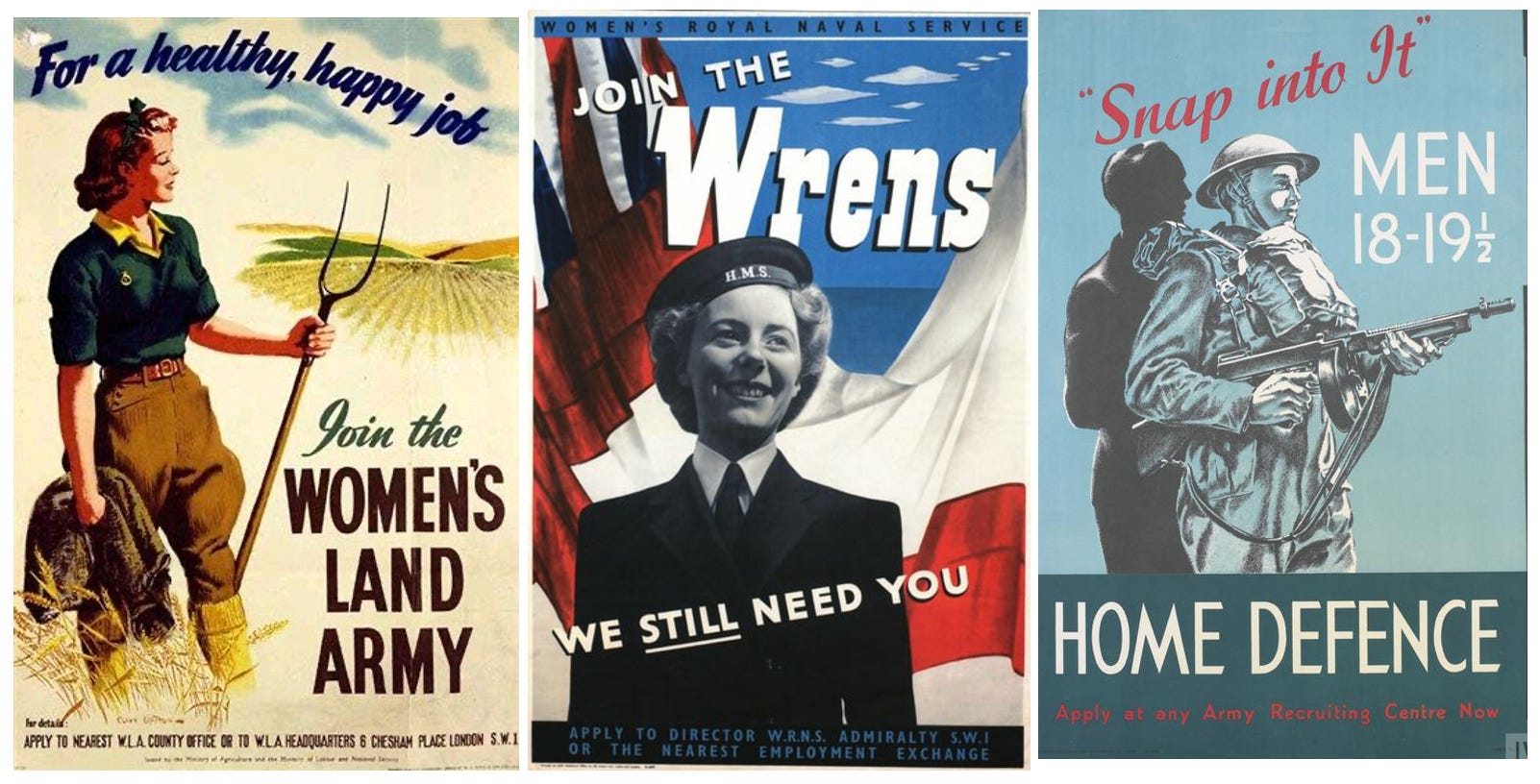
This year, like previously, I will start by remembering my family, particularly those who I grew up with. My Aunt Clare, who died earlier this year aged one hundred, served in the Land Army. Her older sister, my Aunt Kay, served on Eisenhower’s staff for Normandy, as a WREN signaller and died in 2021 at the age of ninety-eight. Their younger brother, my father, acted as a runner for the Home Guard our Home defence unit. I literally grew up, surrounded by people who had served in all manner of roles.
They also included Stan, the family friend who ran the local tyre garage, who had fought in tanks with the Eighth Army in the Desert war. Harry, another, was an airborne veteran who escaped from Arnhem, famous as ‘a bridge too far’. My father’s slightly older best friend had served as an air craftsman on Sunderland flying boats. My great uncle had been a sergeant in the Grenadier Guards in Italy. My uncle had served as an anti-aircraft artillery officer and a second cousin had fought in Humber armoured cars, driving and fighting from Normandy to Germany, then incidentally marrying a German bride.
All of these were influences in my young life, as I grew up in Shropshire. Add to these my school music teacher Mr Clift, a former Japanese prisoner of war on the Burma Railway and when I started work for Lloyds Bank in 1980, Mr Wotherspoon, a senior clerk, was a bomber crew veteran who had won the Distinguished Flying Cross. This meant that such experiences and people, were in the web and weave of my life from childhood, into early adulthood.
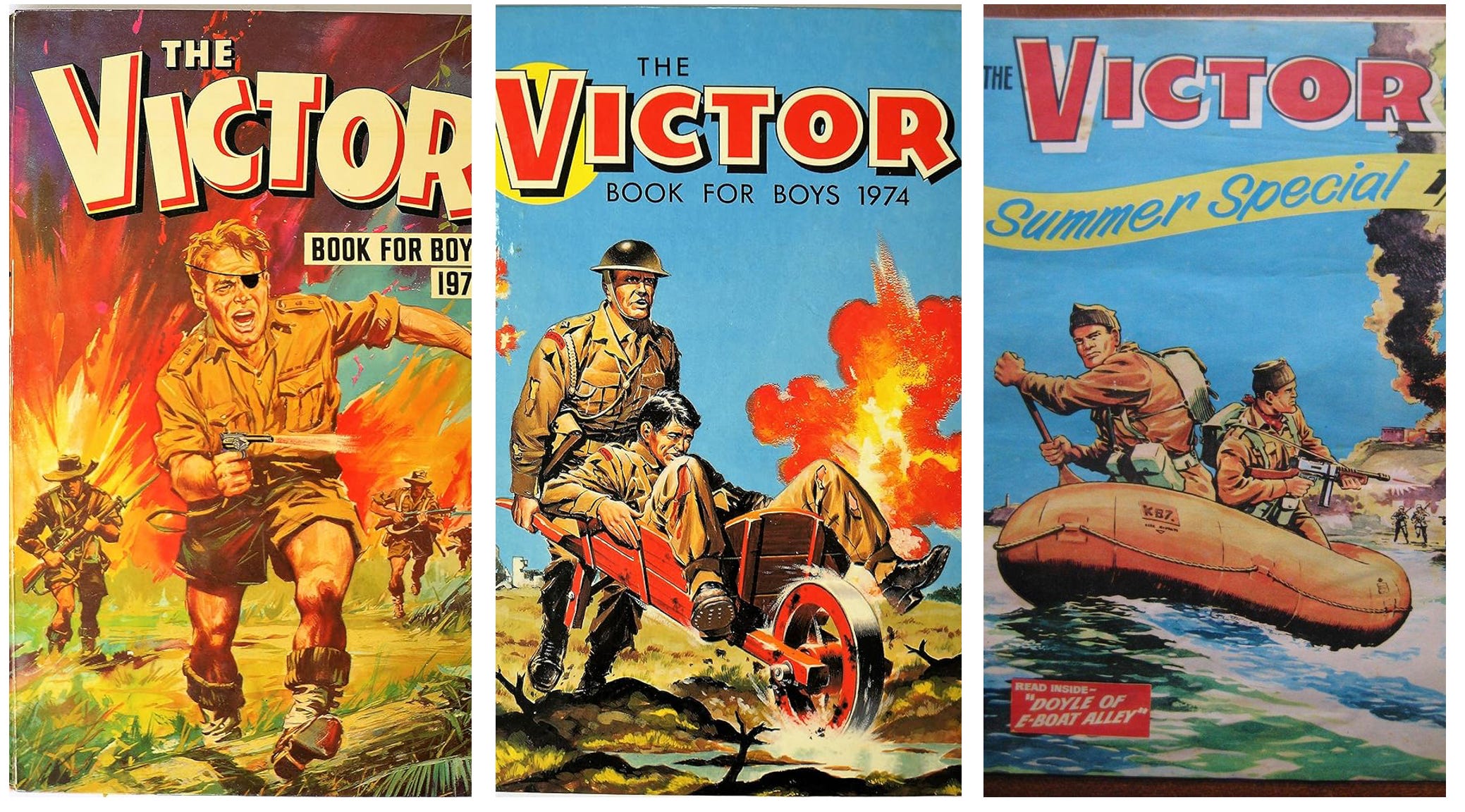
What did all this mean? Well, in addition to the people around me, the popular culture of my childhood was also steeped in WW2. I grew up reading ‘The Victor for Boys’ (yes that was the full name - see below), invariably with a front cover an illustrated story of a Victoria Cross winner, or if not, some made up glorious tale. Every story was about courage, determination, battling against the odds and ‘being British’, in a world of evil and good, something which seems a slightly odd even to write today.
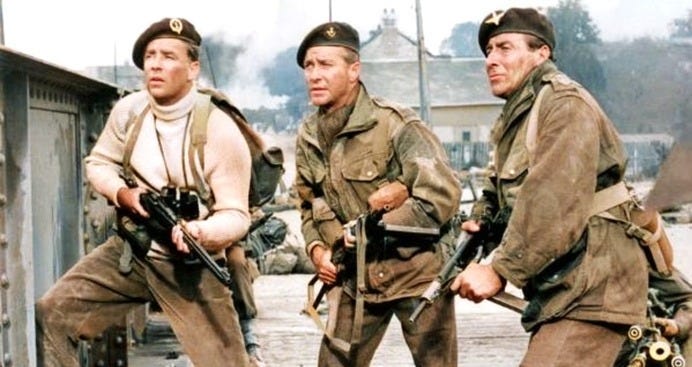
On TV, we watched black and white films of the 1950s like Dunkirk, The Wooden Horse, The Dambusters, The Cruel Sea and The Way Ahead, with stars such as Richard Todd, whom I actually had the pleasure of meeting twice, later in life and David Niven, both of whom had served in the war and in effect portrayed versions of themselves on screen in later films.
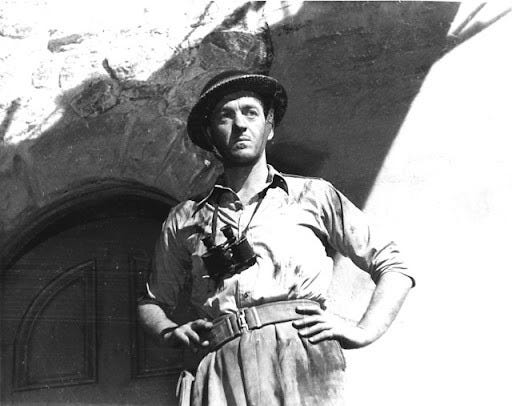
Then came newer films in the 1960s such as The Battle of Britain, The Great Escape and A Bridge Too Far, which all embodied a single leadership ethos, as did serialised TV ‘must watch’ family viewing, including Colditz and even the ever funny Dads Army. All showed that in times of conflict, Britain stood firm. It showed that British men stepped up, whether a plucky cockney soldier or a public schoolboy fighter pilot. Regardless, we all pulled together. They faced defeat or victory with the same spirit of service, sacrifice, integrity, and shared values. Women and civilians, portrayed in films like This Happy Breed and Mrs Minever, showed a similar quiet strength and endurance and the over-arching sense was that we were in this together.
Why does this matter? It matters at least to me, because the culture I absorbed and the people I observed, taught me what a man, a British man, should be. They taught me that respect, service, courage, and restraint were not old-fashioned virtues but were the measure of one’s worth. I learnt that one should serve others before self and that doing what is right matters more than doing what is easy.
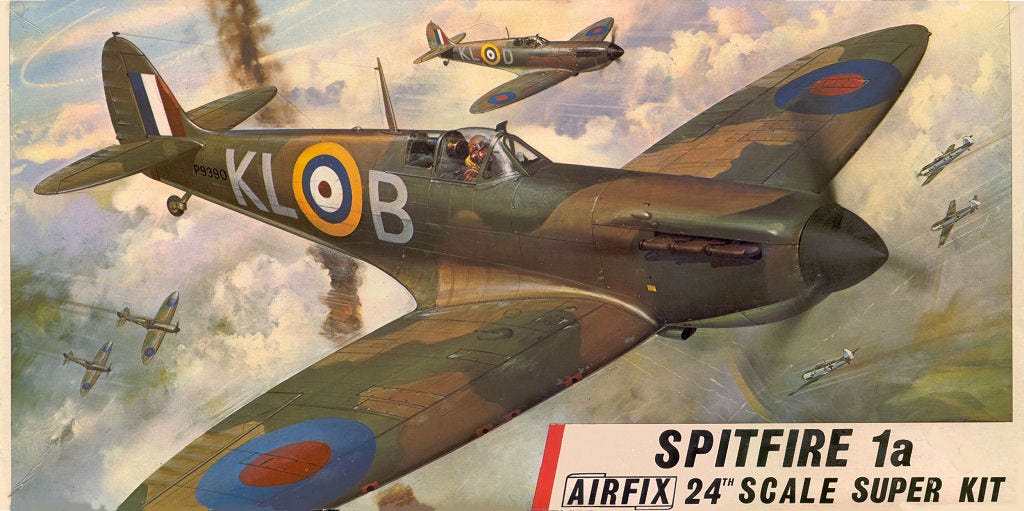
As a child, I built Airfix models of Spitfires and Churchill tanks and collected their plastic soldiers and Britain’s' larger versions, to fight miniature battles. I had an Action Man when ‘he’ arrived on our shores and with my friends we played out scenes of imagined heroism, imitating the example that surrounded us. Such were boyhoods of the 1960s and 1970s.
At age 11, I joined the Air Cadets, proud of my miniature uniform which was the same blue battledress I had seen in films and learnt not just about flying, but how to march, salute, turn out smartly and how to respect the traditions that had made up the RAF. Incidentally, I joined the Air Cadets because the Army Cadets were thought too rough, but it was after a few years in banking, that I chose to take up soldiering and spent ten years as an Army officer. In effect I stepped into the very model of a role, I had grown up admiring since childhood.
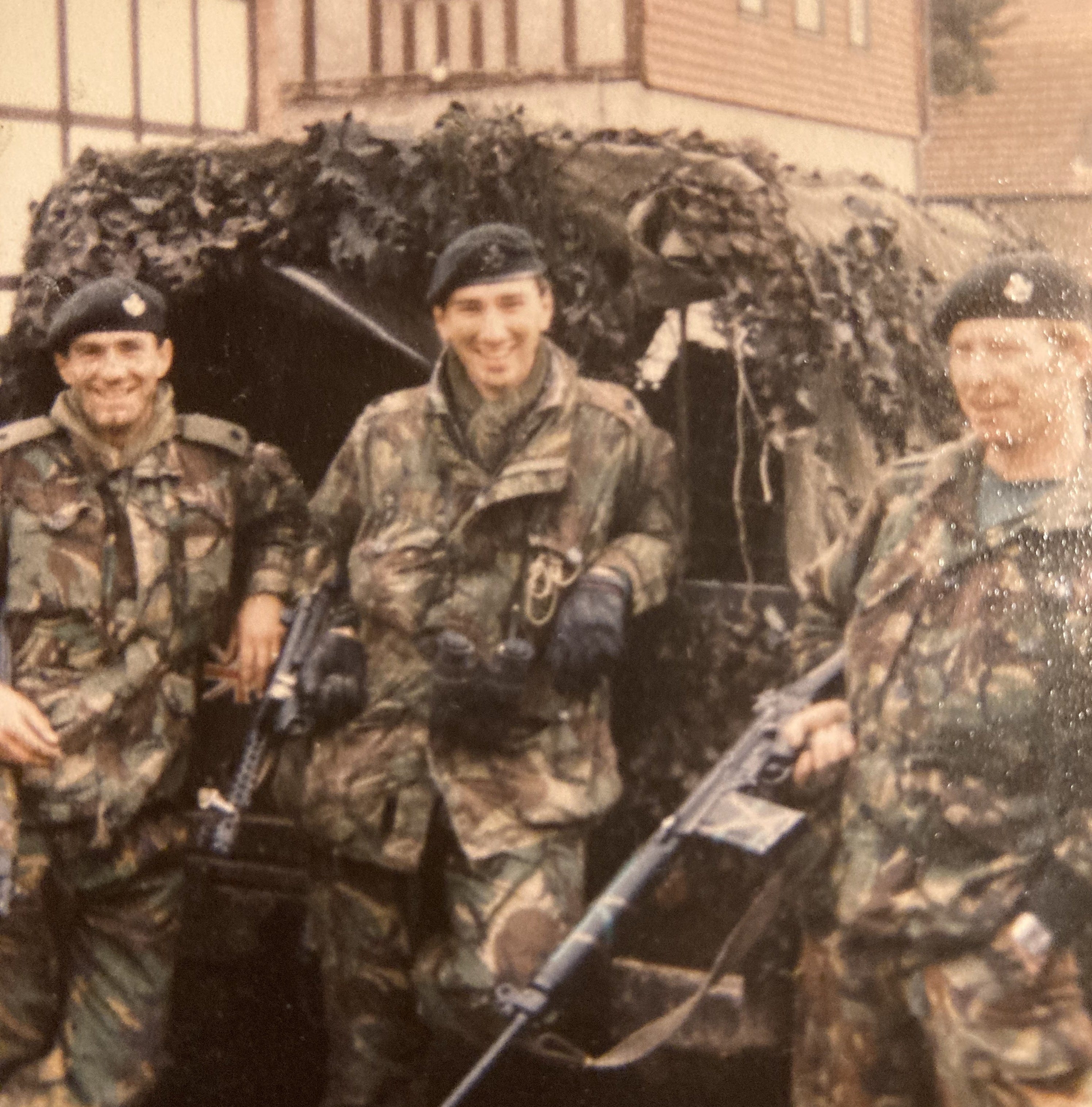
Even after leaving the Army, in the thirty plus years since, the values I learned and absorbed remained the foundation of my life and civilian work. They didn’t become obsolete or irrelevant but have adapted to new circumstances while staying constant in meaning. Service, loyalty, courage, humility, and respect have been the quiet companions of every success I have enjoyed.
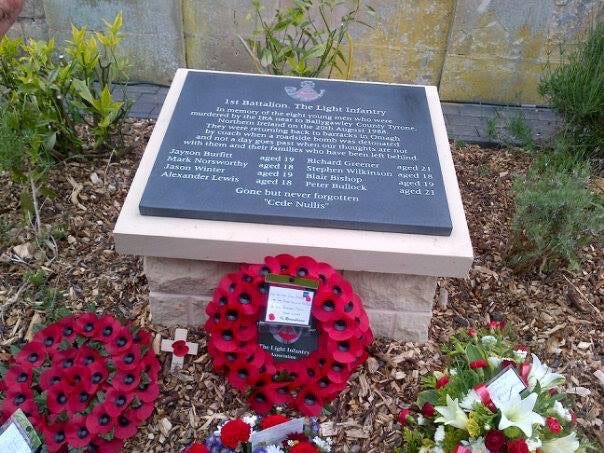
So when I stand in silence at this year’s remembrance, I will think first of my family’s service and sacrifice and then I shall remember that of the men with whom I served in both the 1st Bn Light Infantry and the 22 (Cheshire) Regiment. Some of them were killed during my time in Northern Ireland, and others in the Gulf and Bosnia. But of particular sombre reflection are the eight young soldiers from my old company, whose memorial in my home town, I shall make a point of stopping off at.
But this year, for the first time, I also recognise that without the Second World War, I would have been a very different man, no doubt in the way that we would be a very different country. It shaped the world I was born into, the people who raised me, the examples I followed and the values I hold. In remembering them, I am in a sense remembering how I have been shaped, the person their courage and sacrifice has made possible and yet, in this season of remembrance, another question troubles me.
Where are such influences today? Where are the role models for young boys and men who might, in a modern world, embody service, courage, and quiet integrity rather than seek celebrity, adopt cynicism, or simply think success is noise on social media? There are plenty of people pushing their own personal brand on social platforms about how to be famous, but who are the figures who teach the lessons by example, rather than by slogans. This is part of what we explore through Anthropy, our search for the qualities that build a better nation, starting person by person. In my mind, it is important because heroism is not only about battles and service, it is about examples.
We all need people to look up to. We need to be reminded of what it means to live with purpose, humility, and courage and I acknowledge that such virtues, were just as prevalent in the stoical east end Londoners, those in Coventry, Liverpool and our other cities, who defied the Blitz and bombers and those who kept the mines and farms, shipyards and factories going, through the greatest conflagration we have known. Without such examples relevant today, the inheritance of remembrance becomes just history, something we look back on as illustrative of the ‘greatest generation’ when it should be, a living guide for how we live. If you are interested in how we find the qualities to shape the future, then do consider attending Anthropy26.

I hope this article resonates and as a gesture, if you are interested in attending www.anthropy.uk then here is a personal 20% discount until 12 November: If so visit👉 www.anthropy.uk for a 3-day pass and use my personal code: TAM32620